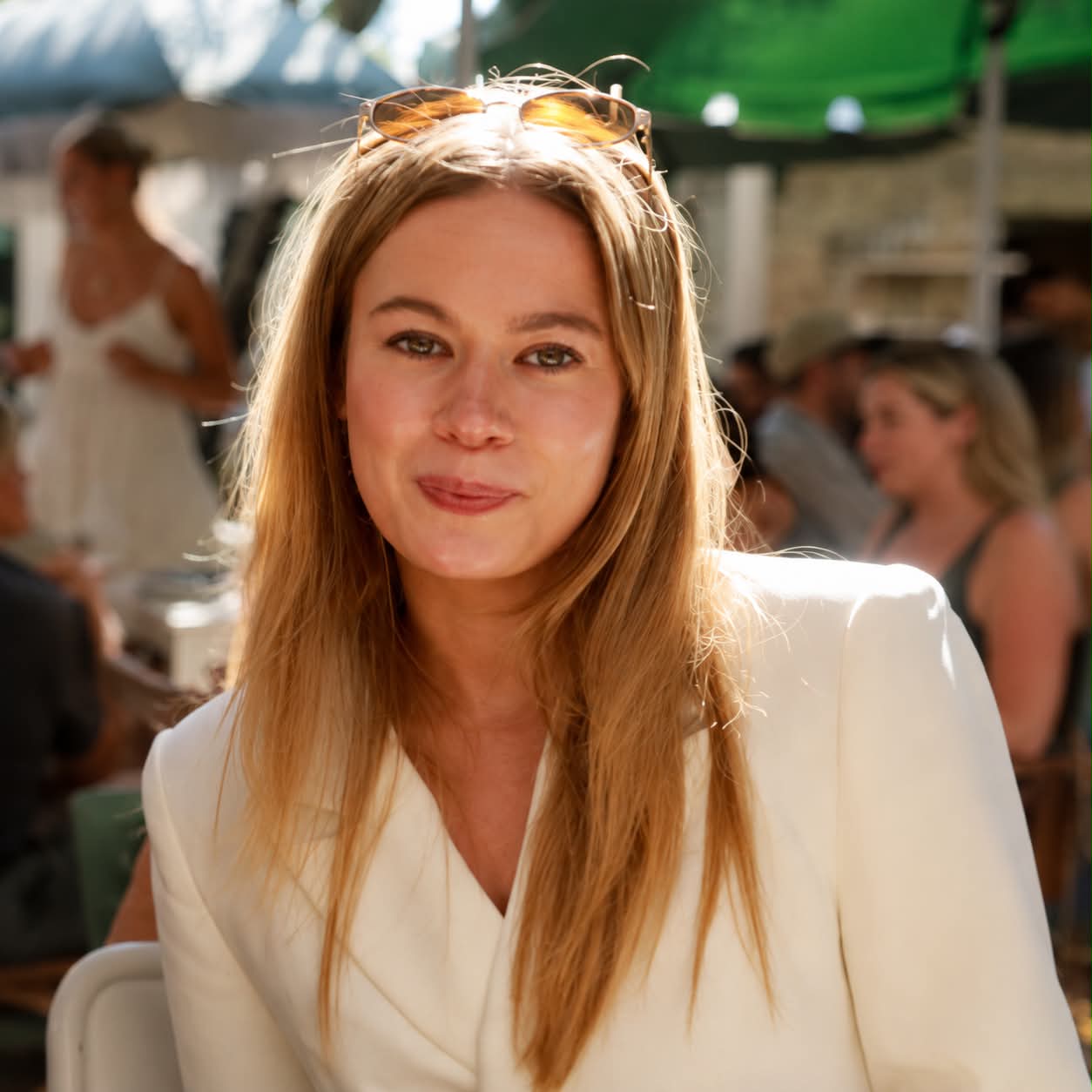
Ella Britten-Jones
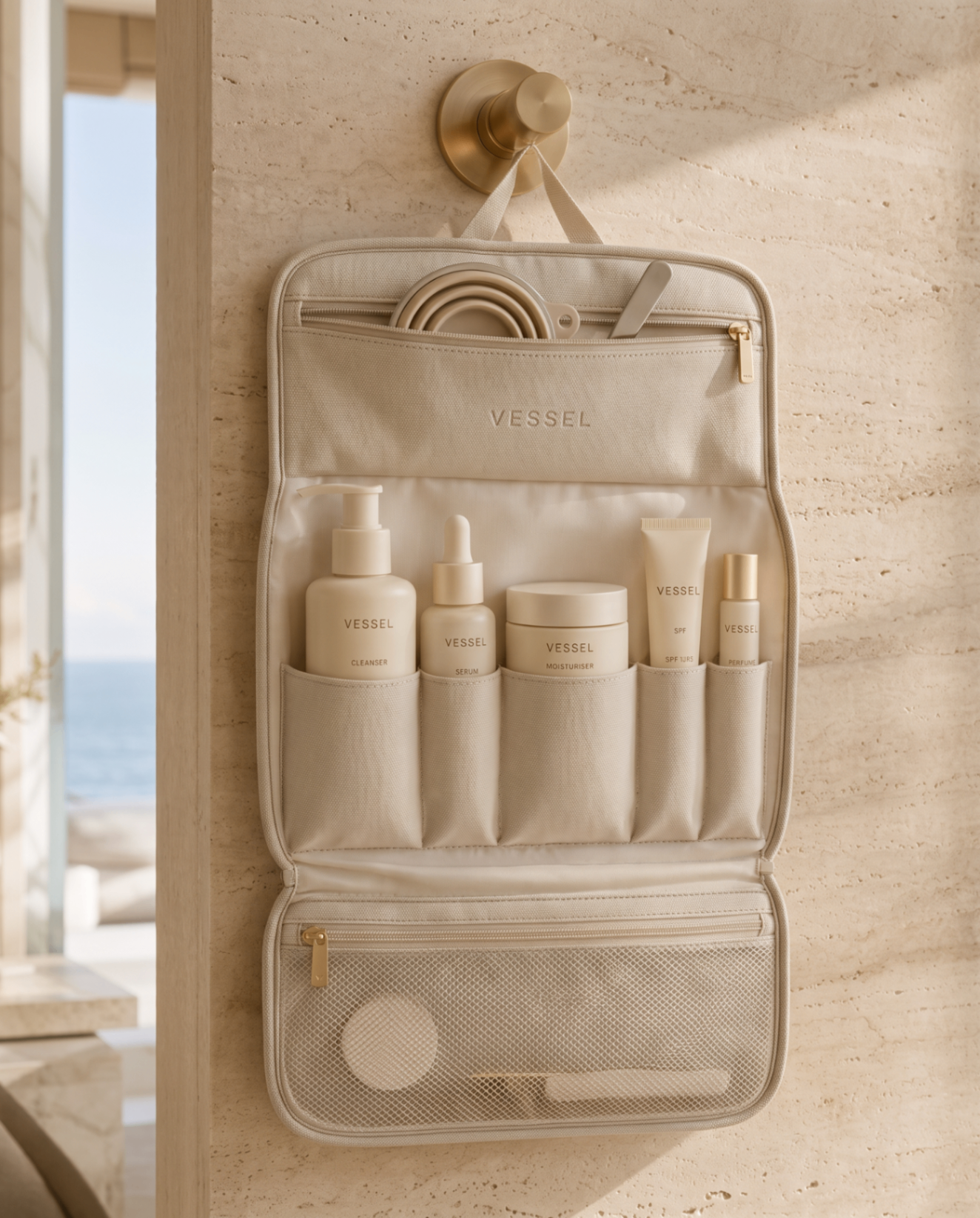
The VESSEL travel skincare system open on a working desk — the bag loaded with its cleanser, serum, moisturiser, SPF and fragrance containers, surrounded by specification drawings, material swatches, callipers and research notes

Ella Britten-Jones

Research, writing, product and film — Sydney

I think meaningful ideas start with understanding.

Nearly four years at MECCA taught me to ask better questions — and notice the problems people had learned to work around.

VESSEL in development — an illustrative composition of the hanging system with its containers, sketches, specification drawings and material swatches.

FindNoticing the pattern before it has a name
Where it started

My part-time job became my favourite part of the week — and the place I learned to pay attention.

Working at MECCA taught me how much you can learn by genuinely listening to people.

I loved asking questions, listening for what someone actually needed and finding the right solution with them. Over time, the same frustrations and workarounds began appearing in completely different conversations.

People were already finding their own workarounds. I started wondering whether there was a better one.

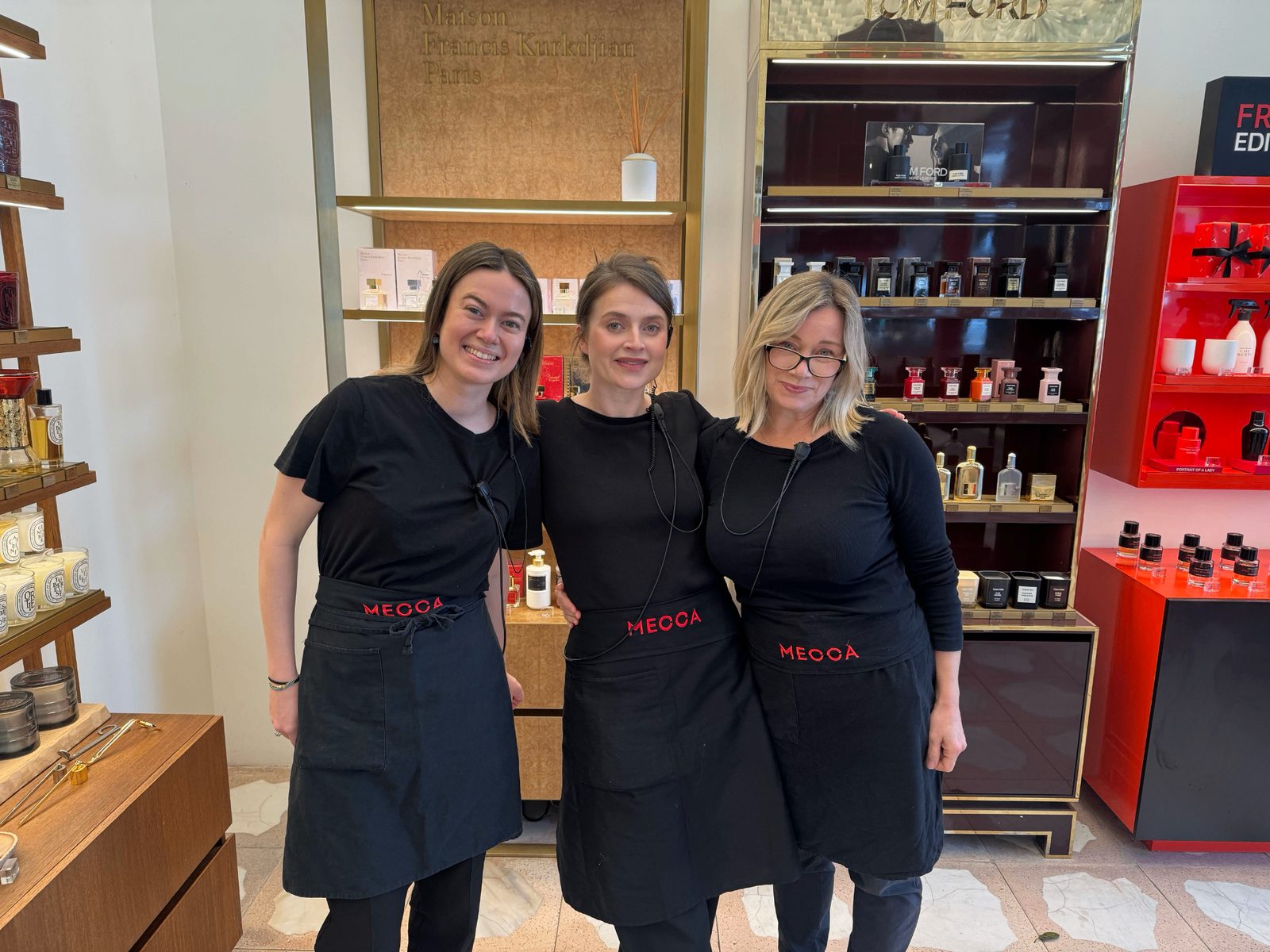
Ella with the team on the floor at MECCA, in front of the fragrance displays
Oct 2022 — present
MECCA Double Bay, thousands of unscripted conversations.
Trusted to train
Brought new team members through product knowledge and consultation technique.
Recognised internally
Relationship-led approach noted by MECCA founder Jo Horgan.
VESSEL

Identifying the gap was one thing. Building the answer was another.

VESSEL V1 — PRE-LAUNCH

A hanging travel skincare system with a container matched to each way a product is actually applied.

A real physical product I conceived and designed, developed directly with a manufacturer in China. Physical samples have been manufactured, received, tested and iterated.

Matched refillable containers, decanting tools and an interior mirror complete the system. Carry-on capacities are printed directly onto each container.

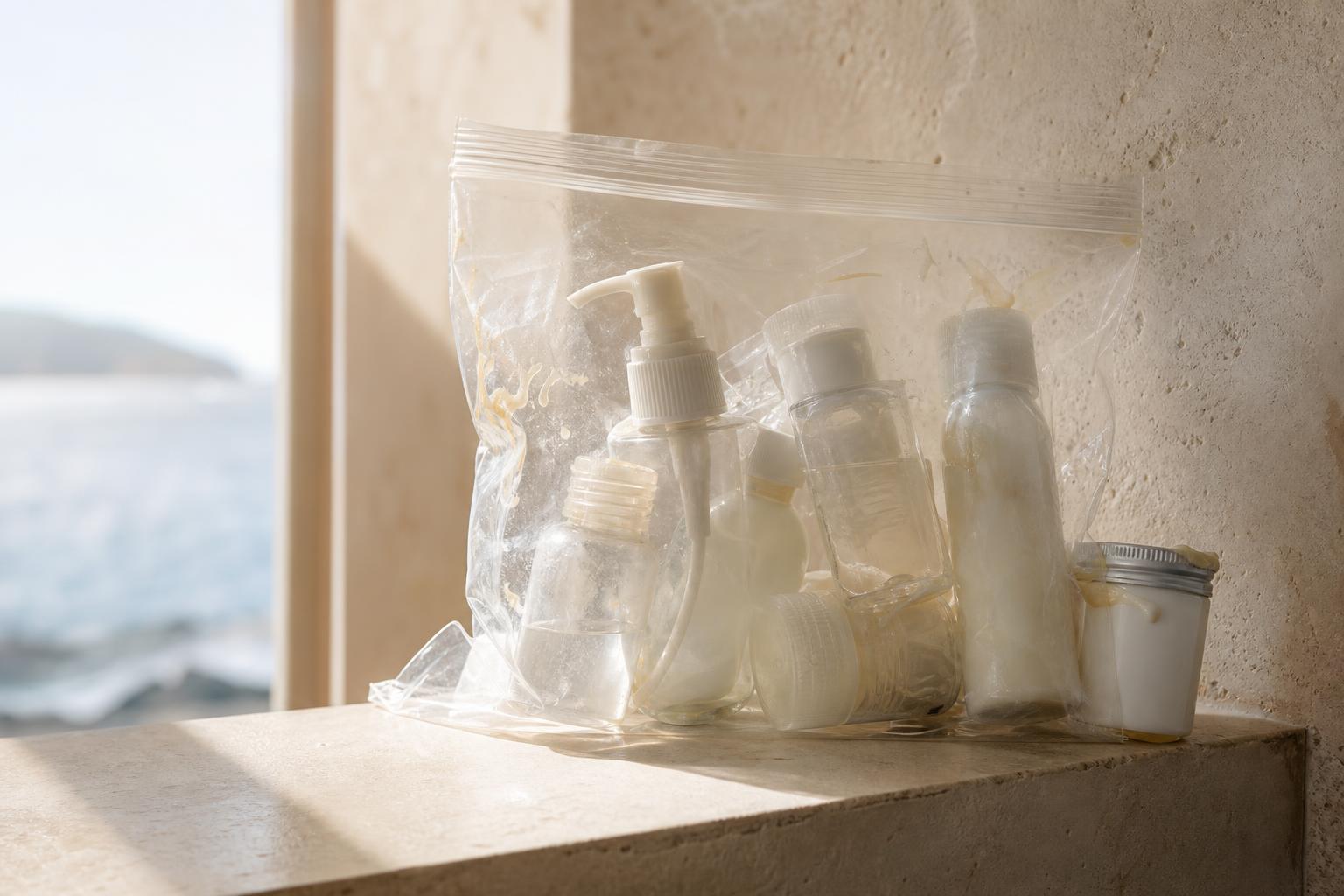
What travelling with your existing skincare usually looks like.

Mismatched clear travel bottles bought separately
Before — bottles bought separately
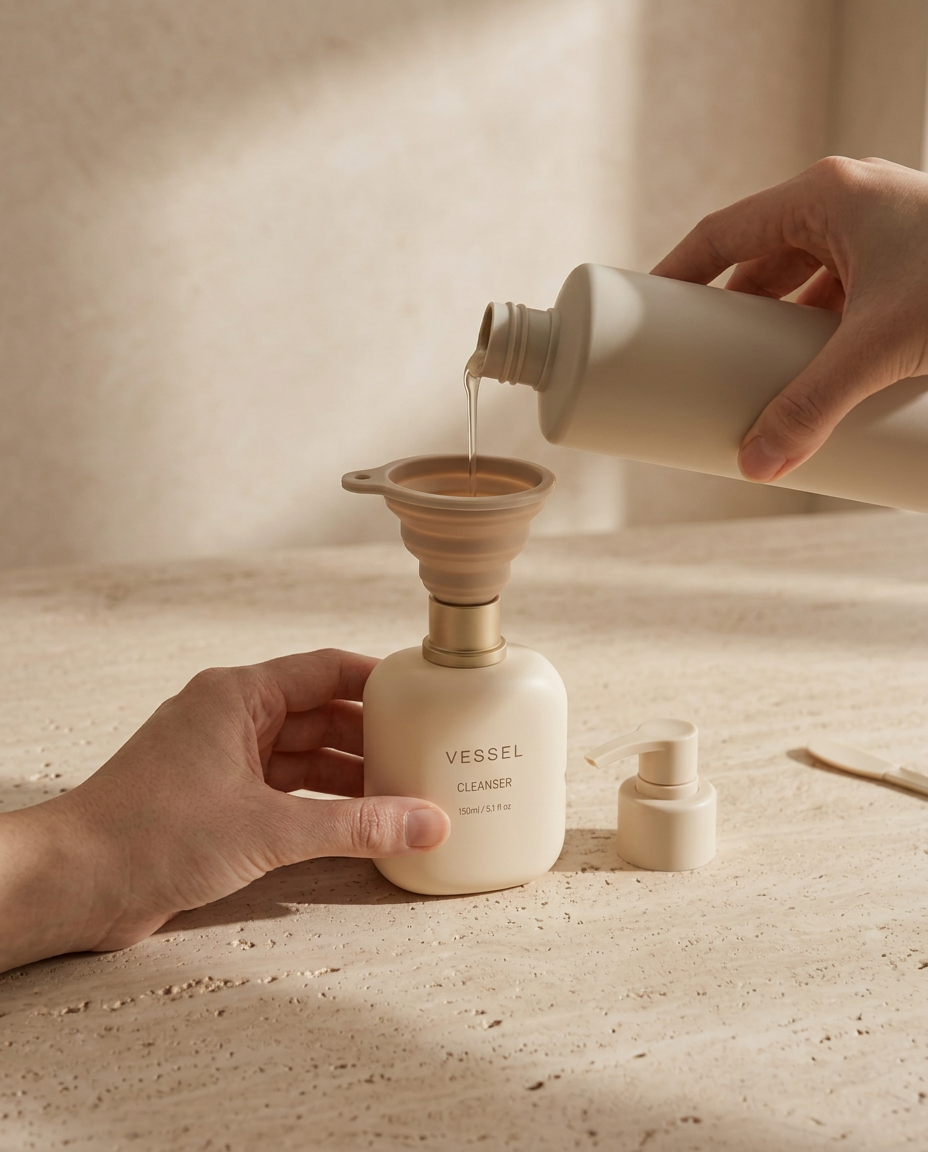
Cleanser being transferred through the collapsible funnel into a refillable VESSEL container
After — decanted into a matched container
The rest of the system — containers, tools and capacitiesOpen

Pump / cleanser · Dropper / serum + facial oil · Jar / moisturiser · Tube / SPF · Atomiser / fragrance

VerifyTesting it against evidence that could disprove it
Interrogating the idea

Building it started with trying to prove myself wrong.

I started using AI less as an answer machine and more as something to argue with. It gave me a fast way to challenge assumptions, expose gaps in my reasoning and test whether the idea still held up when I pushed against it.

I tested the competitive landscape, customer behaviour, positioning and economics against evidence strong enough to change my mind. Sometimes, it did.

Pre-launch model

AUD $149
retail price — pre-launch, not yet sold
AUD $62.45
contribution margin per order, corrected model

Pre-launch assumptions, not performance data.

The cost model

~AUD $28~AUD $53

My first landed-cost estimate was around AUD $28 a unit. Proper benchmarking put it closer to $53 — and showed I had left fulfilment out of the model entirely. I kept the worse number and rebuilt around it.

My own hypothesis

My core hypothesisRanked fifth

Ranked against the strength of the evidence, the problem VESSEL is built around — products losing the format they are meant to be applied in — came fifth. I left it where the evidence put it.

The analysis behind both correctionsScorecard, contribution waterfall, full ranked frustrations, model figuresOpen
Open document
DocumentCompetitor scorecard — ten brands scored 0–3 against five pillars.
Open document
DocumentPer-order contribution waterfall, rebuilt at benchmarked costs rather than the optimistic first draft.

VESSEL’s own core hypothesis ranked fifth — and I left it there

AUD $149
retail price — pre-launch, not yet sold
AUD $62.45
contribution margin per order, corrected model
~1,050
orders to Year 1 break-even

I ranked each frustration by the strength of its evidence. The problem VESSEL is built around — products losing the format they’re meant to be applied in — came fifth, with the least proof. I left it where the evidence put it.

Swipe to compare all columns →

#FrustrationIntensityEvidence
1Leaking products damaging clothes and luggageHighStrong — most cited problem across sources
2Security confiscation of over-limit productsHighStrong — frequently cited, financial and emotional cost
3Routine disruption — skipping or switching productsHighStrong — Mintel & Euromonitor 2025
4Pre-trip packing stressMed-highQualitative — recurring in consumer journals
5Application method compromise — the format problemMed-highQualitative — VESSEL’s core hypothesis, unproven at scale
6Product waste from partially used minisMediumQualitative — consistent but background
7Bathroom clutter and disorganisationMediumQualitative — functional, not emotional
8Travel minis unavailable for some premium productsMediumQualitative — category-specific

Source — VESSEL Mini Tax Report, Section 03.

DecideChoosing what matters, and what to leave out
Making it

I had never manufactured anything.

No contacts, no introductions, no idea how any of it worked. I started reaching out to manufacturers, learning what questions to ask and getting better at separating someone who could make a bag from someone who could actually make VESSEL.

I narrowed the search to three manufacturers and assessed them against the same requirements. Margaret in Fujian ultimately stood out because she engaged with the specification itself — questioning dimensions, tolerances and construction rather than simply sending back a quote.

78
specification iterations
36pp
manufacturing specification, v7.0
3
manufacturers shortlisted, one selected

A render is a wish. A specification is something a stranger can build from.

Open document
Specification, v7.0Function-critical pocket widths hold to ±1 mm; everything else to ±3 mm. Tap to read the page.
Read the sourcing record and the specification pagesManufacturer assessment, exhibit drawings, tolerance rulesOpen

Selected manufacturing specification

A specification has to say what happens when a requirement cannot be met.

Function-critical pocket widths hold to ±1 mm across the full panel, everything else to ±3 mm, and nothing about the materials or construction changes without written approval.

Open document
Sourcing recordThree manufacturing paths assessed against technical comprehension, not lowest unit cost.
Exhibit 01
The retention mechanism

A cross-section translating the locked product principle into forces, load paths and measurable geometry: elastic compression aligns each container against the back wall while the base ledge carries its weight.

Exhibit 02
Construction and enclosure method

A sequenced factory instruction showing how the structural board is enclosed, where the pocket panel is attached and which shortcuts would compromise alignment, rigidity or function.

Selected pages from a 36-page manufacturing specification and the sourcing record behind it. Tap any document to read it at full size.

The first physical sample

The first time it existed outside a document.

Why the bag was sampled firstOpen

The bag and refillable containers were developed through separate manufacturing paths. I started with the bag so I could test the complete system using off-the-shelf containers — refining the layout, storage and pocket dimensions before committing to custom containers designed precisely to fit them.

Filmed on my phone, unedited — the first time I ever held something I had designed.

Some of it was wrong.

Parts of the sample had been manufactured outside specification. Pocket dimensions were off and some of the test containers didn't fit properly. Physical testing also exposed details that couldn't be fully understood on paper.

So I went back to the specification.

I documented every deviation, photographed the evidence and changed the way tolerances were communicated — separating the dimensions that controlled whether VESSEL actually worked from those where the manufacturer could have more room.

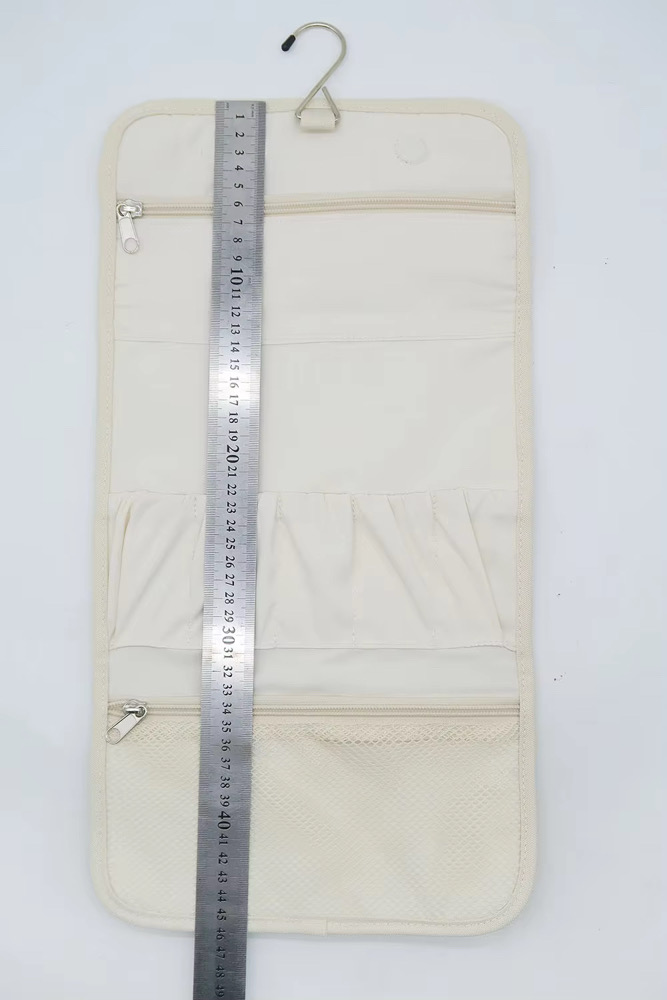
First sample measured against a steel rule for height
First sample — inspection & function testing
Research after the sample

Having something physical gave me better questions to ask.

Once VESSEL was physical, people could respond to something real. I used quick Instagram polls with friends to ask what they packed, how they packed it and what they wanted kept together or separate. Some answers shaped V1; others became questions to carry forward.

What it changed

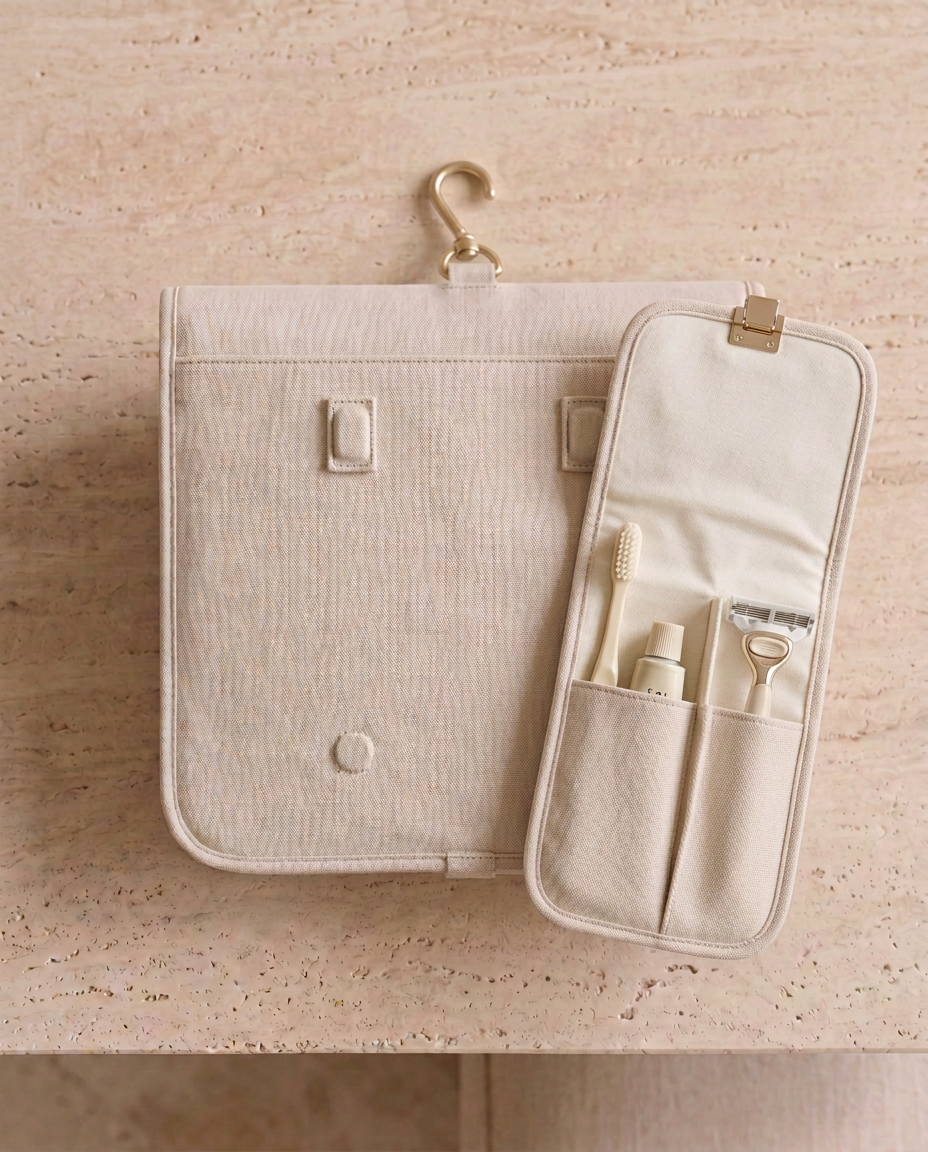
The first sample made me rethink storage. Rather than making VESSEL bigger, I designed a detachable hygiene pouch: divided storage for toothbrush and toothpaste on one side, and a razor on the other. I put it back to the research group; the directional response informed its inclusion in V1.

Render of the detachable hygiene pouch attached to the VESSEL bag
Design intent — renderDirectional response from a small research group — not validation of demand. The pouch has not been manufactured.
See the researchFour polls put to the group, with their resultsOpen
Open document
Can you confine your skincare into 4 or 5 products when travelling?
Open document
Do you pack makeup and skincare together, or separately?
Open document
One large beauty system, or separate systems?
Open document
The hygiene pouch concept, put back to the same group — “Worth including?” Yes 83%, No 17%.

Instagram polls run with a small, self-selected group of friends. Directional response, not validation of demand.

Where VESSEL is now

I’m still figuring it out.

I developed the campaign narrative, art-directed its visual world, used AI-assisted production tools and made the final creative and editorial decisions.

Campaign film — final edit in progress

Built

V1 developed through specification, sampling, physical testing and iteration.

Now

Refining the system through further sampling, testing and manufacturing development.

Next

Keep testing the premise while V1 is still in sampling, then finalise the bag and hygiene pouch and develop the fitted container set with a specialist supplier.

TellMaking it something someone else can act on
The same pattern, elsewhere

I keep noticing things I want to solve.

THE CERTAINTY GAP / SOURCE IT

Similarity isn’t proof.

Two products can look alike without sharing a manufacturing origin. SOURCE IT treats resemblance as a lead, not a conclusion, and keeps confidence and supporting evidence visible.

Working prototype using demo data. Live search is not connected; commercial launch, sourcing accuracy, customers and supplier partnerships have not been validated.

Read the SOURCE IT case study →
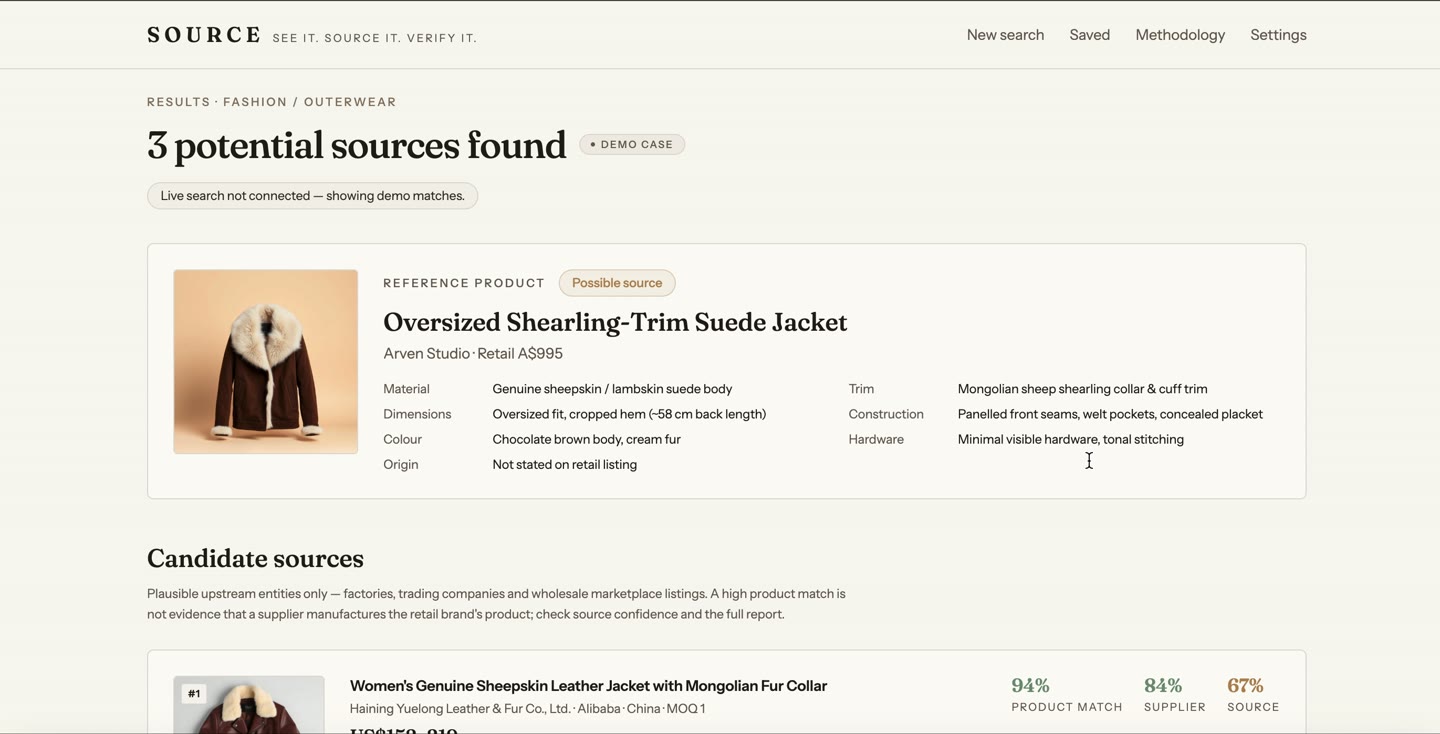
SOURCE IT prototype interface showing a sourcing lead with its supporting evidence and confidence
SOURCE IT — prototype walkthrough. Demo data; live search is not connected. Watch it in the case study.
Relay

Find what mattered in a conversation; leave the editorial call to a person.

Relay prototype — choosing which structured output to generate from a recorded conversation
Relay prototype — intent selects the output. Not tested with users.
Read the Relay case study →
Ella Britten-Jones
About

Ella Britten-Jones

Working face to face with customers taught me to notice what people do, what they work around and what they do not always think to say out loud.

When a pattern stays with me, I want to understand it properly, challenge my first answer and make something that can be tested. AI made me faster at all of it; it never decided what was worth building or when something wasn’t good enough.

The cost model I corrected upward, the hypothesis I left in fifth place and the sample that came back wrong are the work. When the story belongs to someone else, the habit is the same: find the version that is true, show the working, don’t overclaim the rest.

Tell me what you’re working on.